
Tone as a Reflection of Brand Identity in Plastic Surgery Marketing
Tone of voice influences perceived professionalism and brand values in plastic surgery marketing.
From Eminence: The New Standard of Plastic Surgery Marketing
Brand identity is expressed as much through language as through design.
Verbal Identity and Brand Expression
Language gives patients another way to understand a practice beyond its visual identity. Brand tone refers to how the practice's expertise and brand positioning come across in written communication. In order to appeal to the intended audience, It should reflect the characteristics the practice wants patients to associate with it.
Even without explicit guidelines, each practice develops its own communication tone. Website copy, Instagram captions, email responses, consultation forms, advertisements, review replies, and post-procedure materials all contribute to the patient’s experience of the plastic surgery brand.
Jennifer Aaker’s 1997 brand personality research showed that consumers attribute human-like traits to brands, including sincerity, excitement, competence, sophistication, and ruggedness. This means that the tone a practice uses influences what kind of qualities patients attribute to the practice, impacting their choice to contact the surgeon later.
The most effective language in plastic surgery tends to be specific and restrained. This may materialize as sharing educational content in a video format, or as a detailed captions providing further information about the result visible in a before-and-after comparison. Popular slogans and phrases, such as “natural-looking results” or “helping patients feel confident” may lose pursuasiveness because a patient comparing several surgeons is likely to encounter the same claims across several websites. “Natural-looking results” becomes a sensible claim when the practice explains the logic behind the decision-making.
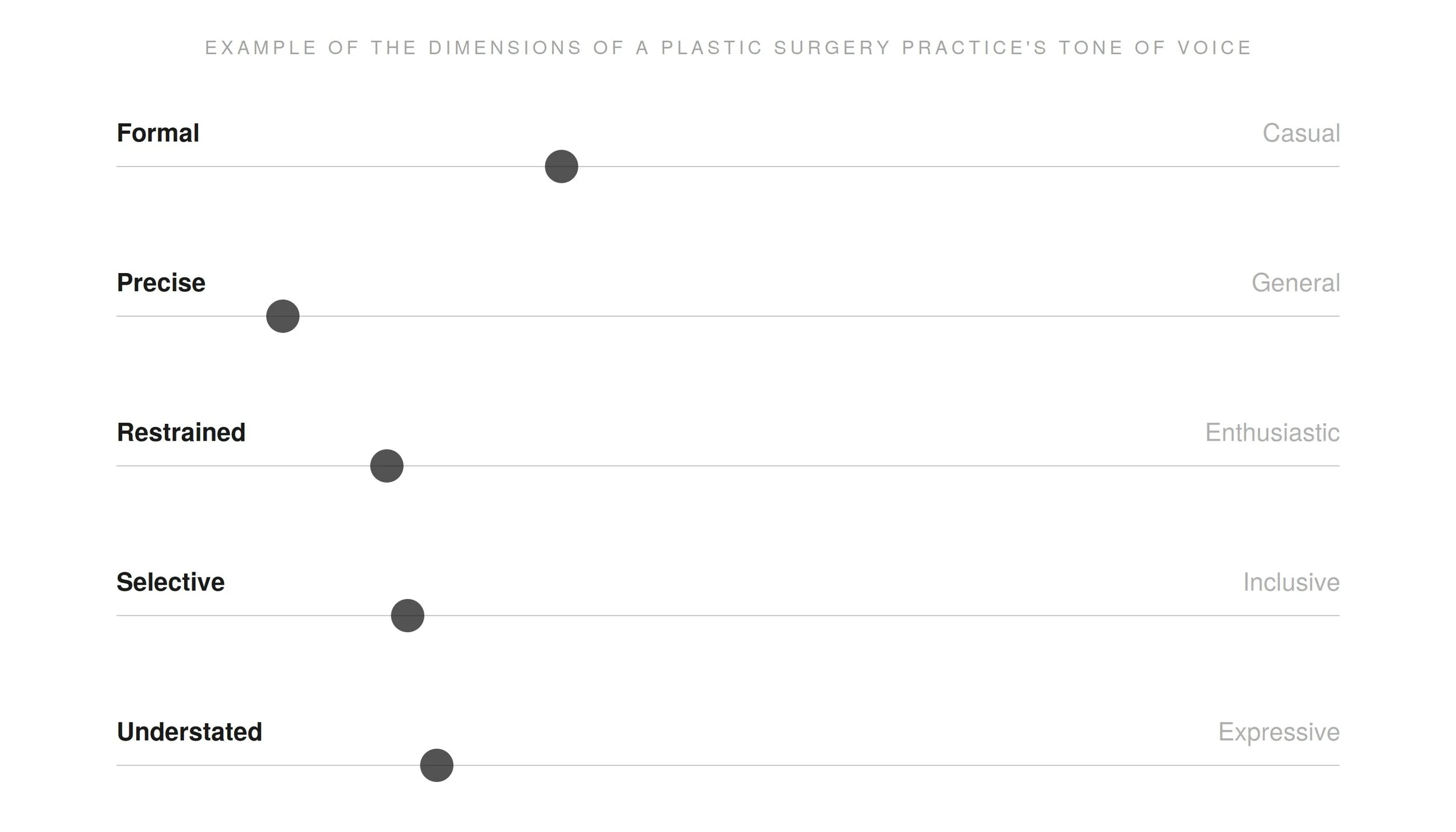
Rather than selecting a single characteristic, tone can be defined along multiple dimensions, allowing the practice to communicate complementary values simultaneously.
Language and Commercial Pressure
Decision-making in plastic surgery requires medical screening, financial planning, psychological readiness, and recovery time. Copywriting that pushes speed can make the practice feel misaligned with the nature of the service itself. Wording such as “limited-time offer,” “summer special,” “flash sale,” and “last chance” risks lowering perceived professionalism and seriousness. Is the practice carefully selecting patients, or is it simply filling a schedule? In some markets, such as the UK, advertising that pressures consumers to make a quick decision about cosmetic surgery can even breach advertising regulations.
Promoting discounts and financing options language can create produce similar kind of damage to the brand image, especially for practices seeking to appeal to premium clients. Leading with low prices may attract some clients, but often at the expense of the practice's reputation. The more aggressively a practice appears to sell, the more difficult it may become to maintain professionalism. Selective patients may seek reassurance that the surgeon will refuse unsuitable candidate or recommend more conservative approaches when necessary. Marketing that feels overly commercial can inadvertently create negative perceptions of the surgeon’s clinical judgment.
In fact, a 2020 experimental study in the Journal of Medical Internet Research found that health messages written in strongly positive, enthusiastic language were rated as less trustworthy and less credible. Participants judged the communicator as lower in integrity and benevolence. The study indicates that overly upbeat and promotional-sounding language in medical contexts may make people more skeptical.
Most practices benefit from choosing a tone that reinforces the importance of careful decision-making, providing insight into the surgeon’s approach, inviting the patient to request a consultation, and then understand their candidacy in relation to anatomy and expectations. Seemingly minor details contribute to how the practice comes across. “Schedule a consultation” sounds different from “claim your spot.” “Determine whether surgery is appropriate” sounds different from “start your transformation.” “Discuss your goals with the surgeon” sounds different from “get the body you have always wanted.”
On Cross-Platform Consistency
The way a practice communicates sets expectations for the patient experience. When the website feels thoughtful and personal but later communications feel generic or transactional, the experience can feel less considered than the brand initially suggested.
Perceived professionalism increases when the same written tone is maintained across patient-facing platforms. The goal is for the values of the practice to be reflected in its language, regardless of where patients encounter or interact with the practice. Context matters: captions ought to be briefer than blog posts, and in-person communication is likely to be warmer than email communication. Clear brand guidelines, followed by all staff members, help ensure that every piece of patient-facing communication conveys a consistent image of the practice.
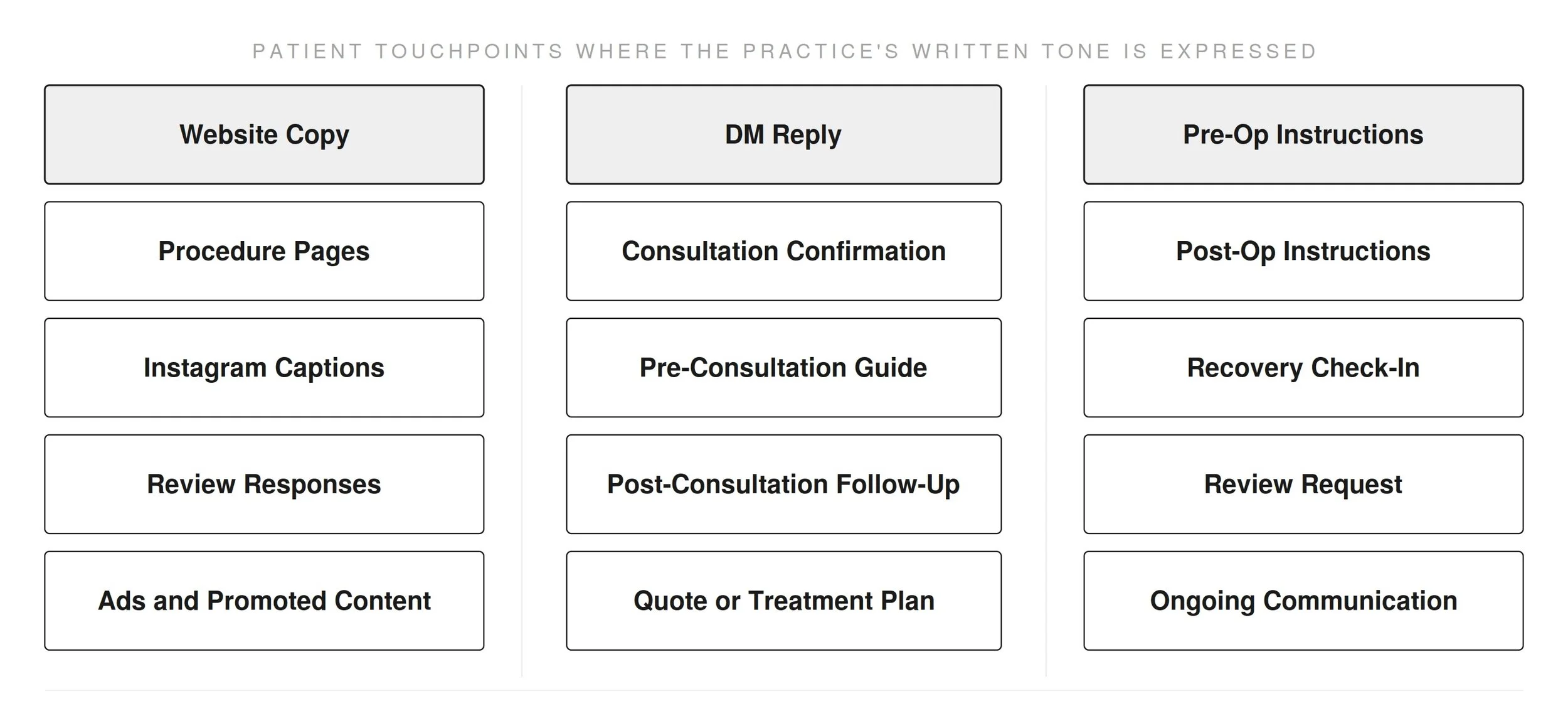
Every piece of written communication shapes how the patient perceives the practice. Cross-platform consistency means that the same underlying character of the practice remains recognizable across different contexts. A patient should be able to move from a website to a social media post without feeling that they are suddenly interacting with a different practice.
Tone of communication is ultimately part of a larger question about the practice's business objectives. Brand perception contributes to client acquisition and perceived value of services, making brand positioning an important business decision. Vitruviani’s brand consulting helps plastic surgery practices assess whether their current positioning supports their commercial goals.
About the Author
Jen Ahlsten is a brand strategist who specializes in luxury branding and marketing for plastic surgeons. She is the founder of Vitruviani and author of Eminence: The New Standard for Plastic Surgery Marketing.
She publishes educational content on how branding functions as a long-term commercial asset in plastic surgery. Her 2025 study, available on ResearchGate, compares how patients perceive branded and unbranded plastic surgery practices across five dimensions, including trust, intent to book, and willingness to pay a price premium. Ahlsten's background is in marketing and fine art.
Selected publications and resources: LinkedIn · Research · Book · Podcast · Substack· Email
Sources
Aaker, J. L. (1997). Dimensions of Brand Personality. Journal of Marketing Research, 34(3), 347–356. https://www.jstor.org/stable/3151897
Ahlsten, J. (2026). Eminence: The New Standard for Plastic Surgery Marketing. Vitruviani.
König, L., & Jucks, R. (2020). Effects of Positive Language and Profession on Trustworthiness and Credibility in Online Health Advice: Experimental Study. Journal of Medical Internet Research, 22(3), e16445. https://pubmed.ncbi.nlm.nih.gov/32154786/
Common Technical Mistakes in Before-and-After Photography
The quality of a surgeon's work is partly judged by how it is presented.
From Eminence: The New Standard of Plastic Surgery MarketingThe quality of a surgeon's work is partly judged by how it is presented.
Poor Photography Quality Costs Patients
Even though before-and-after photography is one of the most powerful assets a plastic surgeon has for communicating the quality of their work, a large audit of Instagram before-and-after photography found that approximately 40 percent of posts scored in a low-quality range on standardized quality criteria. Lighting, zoom, and timing were among the most frequently neglected elements.
The quality of a surgeon's work and the quality of its presentation should reflect one another; otherwise, patients may underestimate the value of the results. Despite the current popularity of video content, prioritizing result photography remains a priority. A recent survey on plastic surgery social media found that photo posts were preferred over video posts, and that before-and-after results were the most influential factor in plastic surgeon selection via social media. Patients are likely to value static before-and-after photographs over video because they allow direct visual comparison when evaluating surgical outcomes.
Technical Promblems That Undermine Credibility
The same failures appear repeatedly across before-and-after galleries. The good news is that most are preventable without a professional photographer. Marked floor positions for patient placement, a fixed lighting setup, and a written posing guide allow the surgeons or any staff member to produce high-quality images.
Investing in adequate camera equipment provides a strong foundation; low resolution and blurriness can make results appear less precise than they are. Regular lens cleaning, correct camera settings, and test shots before each session help control most quality-related issues. Lighting conditions are equally consequential. Natural window light varies by time of day, weather, and season. A fixed lighting setup, positioned identically for both the before and after photographs, is the most reliable way to control this variable.
Varying camera angles and patient positioning create inconsistencies between the before and after shots. Variations in head position between preoperative and postoperative photographs can create apparent changes that are unrelated to the procedure itself. Posture and facial expression should be reproduced as consistently as possible. When a patient is photographed with a neutral expression before surgery and smiling afterward, the perceived improvement may exceed the actual surgical result. Following written protocols can reduce these inconsistencies.
The background of the images should remain as neutral as possible so that the attention remains on the patient. Furthermore, neutral colors help maintain a natural skin tone, and match the result photography to the practice's brand color palette. Photo editing should be limited to technical corrections, such as exposure correction, without altering the scars or the surgical result.
The impact of a lens’s focal length is rarely discussed, even though it can significantly alter how the result appears in photos and affect the apparent shape of the face. When a camera is positioned close to the patient’s face, facial proportions become distorted: the nose appears larger and more projected, the chin appears smaller, and the midface appears wider. This is why the shooting distance needs to remain consistent. A difference in the shooting distances can distort facial proportions and make the surgical result appear distorted.
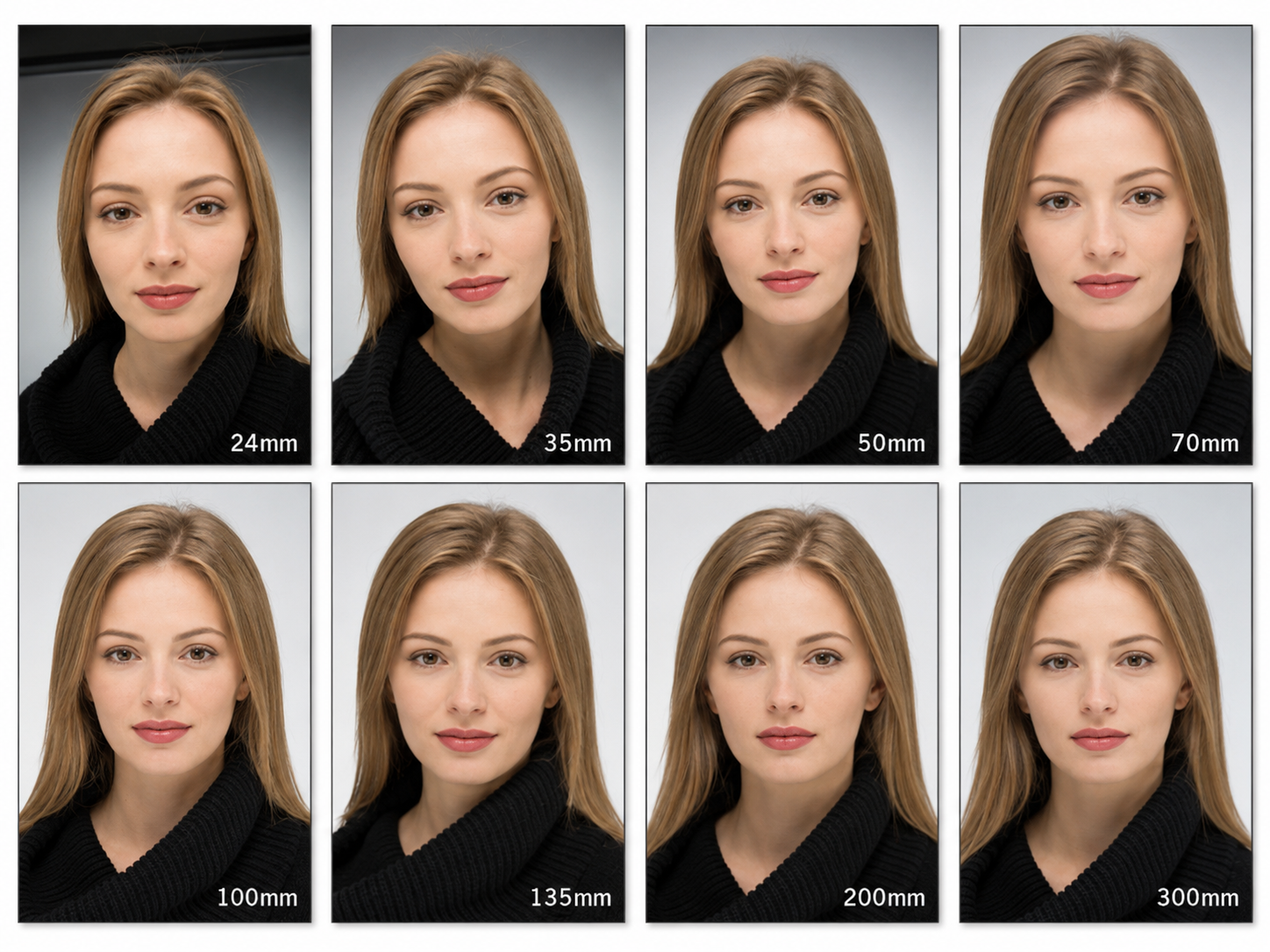
A photography protocol ensures consistency of before-and-after photographs. Eight photographs of the same person, taken during the same session, show how dramatically camera setup can change facial appearance. As the camera moves from a very close, wide view to a more distant, narrower one, the face appears progressively more natural and proportionate. The subject’s nose, jawline, and overall facial balance shift noticeably across the images despite no physical change in the person being photographed.
Patients are typically looking for a case that resembles their own starting anatomy, a reference point for projecting what their own result might look like. A before-and-after gallery dominated by a single patient demographic can make the practice appear specialized in a narrow range of anatomy. A gallery that includes both subtle refinements and more dramatic transformations, where applicable, helps patients understand whether the practice’s aesthetic range aligns with their own goals. Patients researching a procedure may compare several surgeons simultaneously, viewing their results side by side across websites and social media. This means that the quality and consistency of photography can strongly influence how a practice is perceived relative to competitors. Practices that invest in high-quality result photography can still stand out in a field where inconsistent presentation remains common.
Before-and-after photography entails implications far beyond marketing, involving patient privacy and professional responsibility. Displaying photographs without explicit written authorization can expose a practice to considerable legal and reputational risk. For this reason, explicit written consent should be obtained and documented at the time photographs are taken, with clear records of how images may be used across websites, social media, advertising, and educational materials.
Transparency in Result Presentation
Before-and-after images are subject to several inherent limitations. Results may have been captured at a misleadingly favorable point in recovery or photographed from a particularly flattering angle.
Contextual information, such as captions indicating when post-operative images were taken, help patients adjust their expectations. Where applicable, providing further context helps patients understand which changes resulted from surgery and which characteristics remain unchanged. Practices that openly discuss limitations are likely to be perceived as honest and more trustworthy than providers relying on aggressively curated result galleries.
Video can serve as a valuable secondary format alongside static before-and-after photography by adding a sense of dimensionality that photographs alone cannot fully convey. A rhinoplasty patient slowly turning their head on camera allows viewers to observe the result from multiple perspectives rather than a single carefully selected angle. Used in this way, video can strengthen credibility when filmed under consistent, transparent conditions, by reducing the perception that outcomes depend primarily on pose, lighting, or angle selection.
About the Author
Jen Ahlsten is a brand strategist and author specializing in luxury branding and marketing for plastic surgeons. She is the founder of Vitruviani and wrote Eminence: The New Standard for Plastic Surgery Marketing.
She publishes educational content on how branding functions as a long-term commercial asset in plastic surgery. Her 2025 study, available on ResearchGate, compares how patients perceive branded and unbranded plastic surgery practices across five dimensions, including trust, intent to book, and willingness to pay a price premium. Ahlsten's background is in marketing and fine art.
Selected publications and resources: LinkedIn · Research · Book · Podcast · Substack· Email
Sources
Ahlsten, J. (2026). Eminence: The New Standard for Plastic Surgery Marketing. Vitruviani.
Aldahlawi, S., & Al-Noury, K. I. (2024). Picture perfect: Standardizing and safekeeping clinical photography in plastic surgery. Annals of Medicine and Surgery.
ElAbd, R., Alghanim, K., Alnesef, M., Alyouha, S., & Samargandi, O. A. (2023). Aesthetic surgery before-and-after photography bias on Instagram. Aesthetic Plastic Surgery.
Plastic Surgery Specialists. (2021). Photographic Standards in Plastic Surgery.
Shiah, E., Weidman, A. A., Valentine, L., Alvarez, A. H., Foppiani, J. A., & Lin, S. J. (2023). Capitalizing on social media: An evaluation of the public's preferences for plastic surgery social media content. Journal of Plastic, Reconstructive & Aesthetic Surgery.
Soares, D. J., et al. (2022). Introducing the SEPIA scoring system: A tool for the assessment of standardization and quality in aesthetic surgery before-and-after photographs. Plastic and Reconstructive Surgery – Global Open.
Ward, B., Ward, M., Friedman, O., & Paskhover, B. (2018). Nasal distortion in short-distance photographs: The selfie effect. JAMA Facial Plastic Surgery.
How Design Influences Patients' Perception of a Plastic Surgery Practice
The visual presentation of a practice influences whether patients perceive it as a good fit. Sometimes, this evaluation is deliberate, such as when a patient recognizes imagery that reflects their age or aesthetic aspirations. More often, the response is immediate and intuitive: the clinic may feel too corporate, too casual, too aspirational, or excessively clinical.
From Eminence: The New Standard of Plastic Surgery MarketingThe visual presentation of a practice influences whether patients perceive it as a good fit. Sometimes, this evaluation is deliberate, such as when a patient recognizes imagery that reflects their age or aesthetic aspirations. More often, the response is immediate and intuitive: the clinic may feel too corporate, too casual, too aspirational, or excessively clinical.
Visual Identity as Market Positioning
Design choices across the digital and physical patient-facing materials of a plastic surgery practice are the visual expression of its brand positioning. When executed correctly, design communicates the practice's value proposition visually, helping prospective patients immediately recognize whether the practice aligns with their needs and expectations.
A practice seeking to attract discreet facelift patients in their fifties and sixties should look different from a clinic specializing in high-volume body contouring. A surgeon known for subtle rhinoplasty should rely on a different kind of visual language than a practice known for dramatic transformations. A strong visual identity helps aligned patients recognize relevance while reducing interest from those unlikely to be a good fit. This is why brand identity cannot be reduced to personal taste but has to be calibrated to the practice's intended market position.
Visual Identity Influences Perception
Patients make assumptions based on visuals even when they are unaware of doing so. Photography, color palette, composition, typography, and logo design each create immediate associations. Visual design in branding serves the same purpose as personal styling: it translates values and intention into a visual language others read before a word is spoken.
Even seemingly minor visual choices affect perception. In 2012, writer and filmmaker Errol Morris ran an informal large-scale online experiment embedded in a New York Times quiz, gathering responses from over 45,000 readers. Participants read the same passage of text set in different typefaces and were asked whether they agreed with the argument. Those who read the passage in Baskerville, which is a formal and classic font, agreed at a higher rate than those who read it in any other typeface tested. The content was identical, so the typeface appeared to have a small effect on how believable the statement felt. Like any visual cue, different fonts trigger different associations. Traditional fonts imply heritage and formality. Minimalist fonts imply modernity.
Similarly, research in associations created by different types of logos found that angular logos are associated with stability and competence, while rounded logos are associated with warmth and approachability. Applied to plastic surgery, a surgeon whose positioning is based on expertise in complex revision cases should look different from one whose brand is positioned around mummy makeovers.
The same principle applies to color. A 2012 study by Labrecque and Milne, published in the Journal of the Academy of Marketing Science, found that color hue directly influences perceived brand personality and consumer response. Neutral and muted palettes are often used to suggest sophistication and exclusivity, while bright, saturated colors can create a more energetic or commercial impression. Again, color should be chosen for the expectation it creates in the specific patient the practice wants to attract.
Few elements communicate the character of a practice as immediately as photography. High-quality photography tends to communicate high quality, making a practice appear more modern and established. The opposite is equally true, which is why one of the most important improvements plastic surgeons can make to their online presence is ensuring that every image on their website and social media profiles meets a high visual standard.
Photographs of the surgeon help build patient trust. In an exploratory perception study, participants consistently cited professional portraits of physicians as contributing to a stronger sense of trust and confidence when evaluating first impressions across different plastic surgery websites. Before-and-after photographs might be the most consequential visual asset a practice produces. The following chapter discusses best practices for shooting before-and-after images to a consistent, high-quality standard.
Avoiding generic stock photography in marketing materials help differentiate from the vast majority of competitors. Research by Hagtvedt and Patrick found that incorporating fine art into a product's visual presentation increases perceptions of prestige, a finding that extends to the broader principle that refined visual surroundings elevate how a product or service is evaluated. Finally, composition and spacing of imagery and other elements in contexts such as web design and social media posts also affect whether the practice feels premium or mass-market.
The Complete Visual System Beyond the Logo
Many practices misunderstand visual identity as a modern website or logo design. These matter, but lose their impact if the brand system as a whole is unintentional. A beautiful website loses authority when the Instagram profile feels unconsidered. An elevated business card cannot compensate for a consultation space that fails to reflect the same standard.
A coherent visual system across patient touchpoints helps reinforce brand recognition and trust throughout the patient's research phase. Patients considering plastic surgery often move through a prolonged decision-making process, and may return to a website several times, forward it to someone whose opinion they value, and repeatedly revisit saved social media posts before booking a consultation. The practice’s visual system should create a recognizable standard across patient-facing materials, whether the patient is viewing Instagram reels or reviewing post-operative instructions on the practice's website.

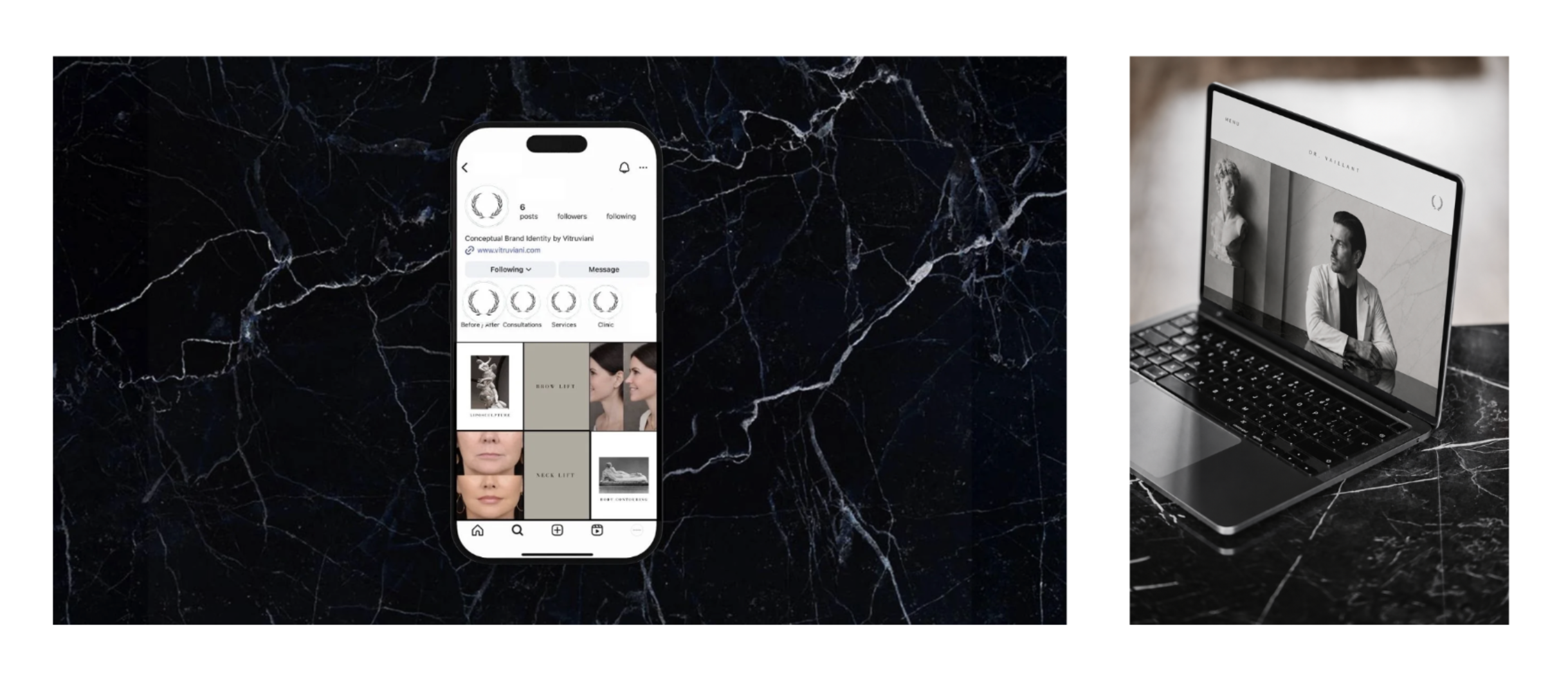

Efficient plastic surgery branding maintains a consistent identity throughout the entire patient experience, from digital presence to physical environment. Dr. Vaillant is a plastic surgery concept by Vitruviani designed to explore what high-level brand consistency can look like in practice.
A practice that communicates advanced visual judgment through its clinic environment and branding can lead patients to infer that similar discernment may shape clinical decisions and outcomes. Similar expectations occur across contexts: a well-dressed consultant is often perceived as more capable, and an architect with a beautifully presented portfolio inspires greater confidence in their spatial judgment.
Design is ultimately part of a larger question about the practice's business objectives. Brand perception contributes to client acquisition and perceived value of services, making brand positioning an important business decision. Vitruviani’s brand consulting helps plastic surgery practices assess whether their current positioning supports their commercial goals.
About the Author
Jen Ahlsten is a brand strategist and author specializing in luxury branding and marketing for plastic surgeons. She is the founder of Vitruviani and wrote Eminence: The New Standard for Plastic Surgery Marketing.
She publishes educational content on how branding functions as a long-term commercial asset in plastic surgery. Her 2025 study, available on ResearchGate, compares how patients perceive branded and unbranded plastic surgery practices across five dimensions, including trust, intent to book, and willingness to pay a price premium. Ahlsten's background is in marketing and fine art.
Selected publications and resources: LinkedIn · Research · Book · Podcast · Substack· Email
Sources
Ahlsten, J. (2025). Branding in Aesthetic Plastic Surgery: Patient Perception of Branded vs. Unbranded Practices. ResearchGate. Exploratory study. ResearchGate. https://www.researchgate.net/publication/403316668_Branding_in_Aesthetic_Plastic_Surgery_Patient_Perception_of_Branded_vs_Unbranded_Practices
Ahlsten, J. (2026). Eminence: The New Standard for Plastic Surgery Marketing. Vitruviani.
Hagtvedt, H., & Patrick, V. M. (2008). Art infusion: The influence of visual art on the perception and evaluation of consumer products. Journal of Marketing Research. https://psycnet.apa.org/record/2008-06730-010
Jiang, Y., Gorn, G. J., Galli, M., & Chattopadhyay, A. (2016). Does your company have the right logo? How and why circular- and angular-logo shapes influence brand attribute judgments. Journal of Consumer Research. https://psycnet.apa.org/record/2016-28899-004
Labrecque, L. I., & Milne, G. R. (2012). Exciting red and competent blue: The importance of color in marketing. Journal of the Academy of Marketing Science. https://psycnet.apa.org/record/2012-20482-006
Morris, E. (2012). Hear, All Ye People; Hearken, O Earth. The New York Times.
Branding as the Foundation of Effective Plastic Surgery Marketing
Strong branding is associated with greater demand, premium pricing, greater resilience during market shifts, and stronger long-term financial performance.
From Eminence: The New Standard of Plastic Surgery MarketingStrong branding is associated with greater demand, premium pricing, greater resilience during market shifts, and stronger long-term financial performance.
The Unintentional Brand
Most surgeons, if asked whether they have invested in branding, would say no, or would describe having a graphic designer assist them with a logo and a web designer with a website, and leave it at that. Branding carries associations that feel incompatible with medical culture: the management of image over substance, facade over outcome. This is a reasonable instinct in a field where professional reputation is built over years of clinical practice. The problem is that emotional responses can shape whether patients continue evaluating a practice after landing on a website or seeing its social content.
While branding has been extensively studied in consumer goods and mainstream service industries, research in healthcare and medical-aesthetic services has emerged more recently. Bank and colleagues provide one of the few empirical accounts linking branding to measurable performance outcomes in plastic surgery. In their case study of a New York-based plastic surgery group practice, the authors documented the process of rebranding through a new website, unified visual identity, and coordinated social media marketing. Following implementation, the practice reported a 91% increase in website traffic, an 82% rise in website sessions, and a 21% growth in new patient volume.
A brand forms whether it is intentionally designed or left to chance. Every patient-facing element from before-and-after photography to website copywriting, review responses, and the physical experience of the consultation room, contributes to the practice’s brand perception. Designing a brand intentionally creates the opportunity to present the practice as it wants to be perceived. Leaving it to form on its own produces whatever impression the available materials happen to create, which is rarely the most accurate or compelling version of what the practice actually offers.
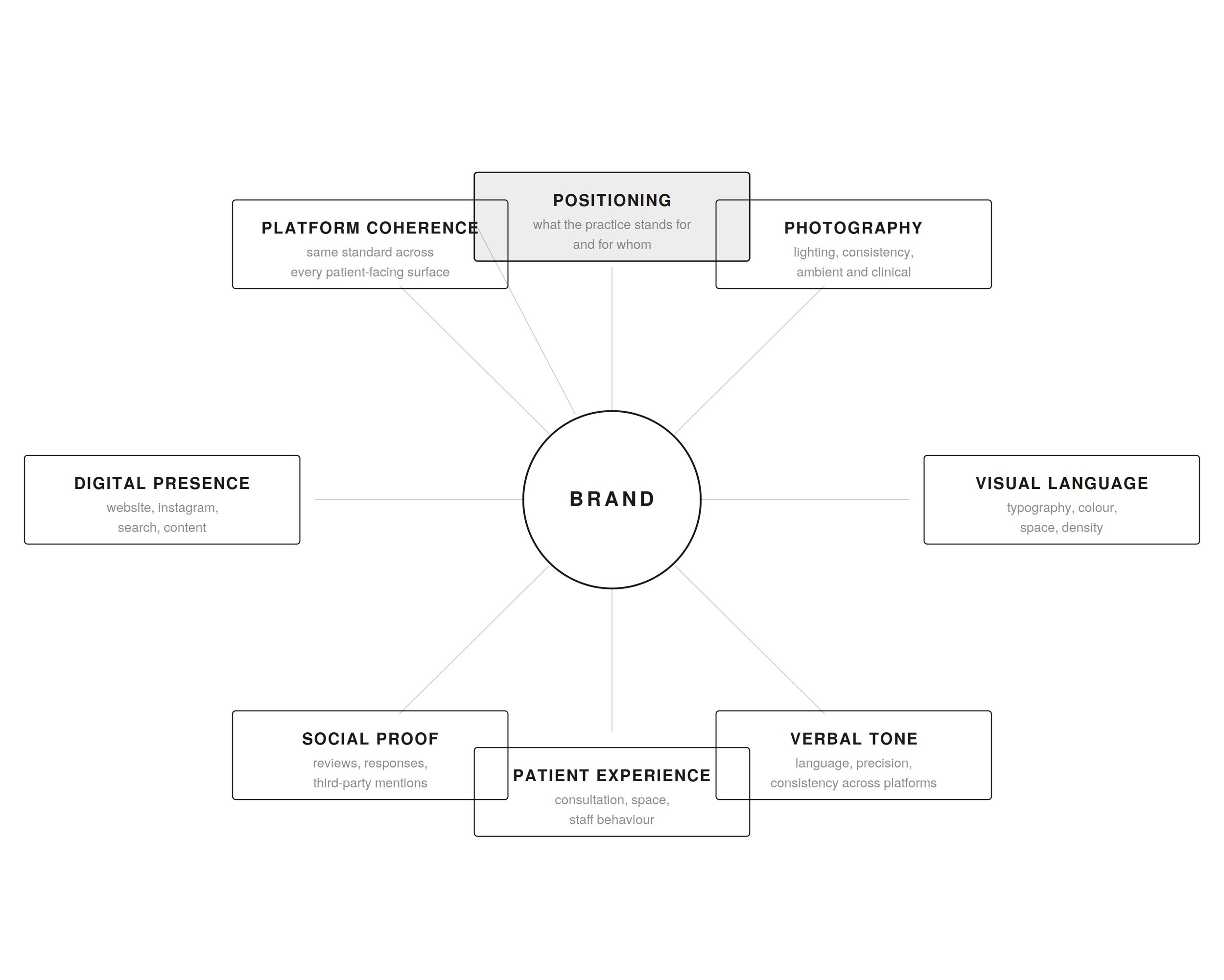
A brand forms whether it is built intentionally or left to chance. Every patient-facing touchpoint, from positioning and photography to language, reviews, digital presence, and the patient experience with clinic staff, contributes to how the practice is perceived.
Patients Choose With Emotion and Justify With Logic
The business case for branding begins with how high-stakes decisions are actually made. People often believe they reason their way to a conclusion, but high-stakes decisions are often shaped by emotional responses, then evaluated through rational criteria.
One of the most widely accepted ideas in cognitive psychology is that human judgment operates through two modes of thinking. Psychologist Daniel Kahneman won a noble prize because his research proved that human beings are not entirely rational and rely on intuitive shortcuts, heuristics, and cognitive biases that often lead to irrational decisions.
According to Kahneman, most of our thinking is fast, automatic, intuitive, and emotionally guided. He calls this System 1 thinking. System 2, on the contrary, is deliberate and analytical. Branding influences the initial reaction of System 1. If the practice feels trustworthy, refined, and consistent, the patient is more likely to keep paying attention and review the surgeon’s work more closely. If the first impression feels unclear or inconsistent, the patient may leave before carefully evaluating the surgeon’s work and experience.
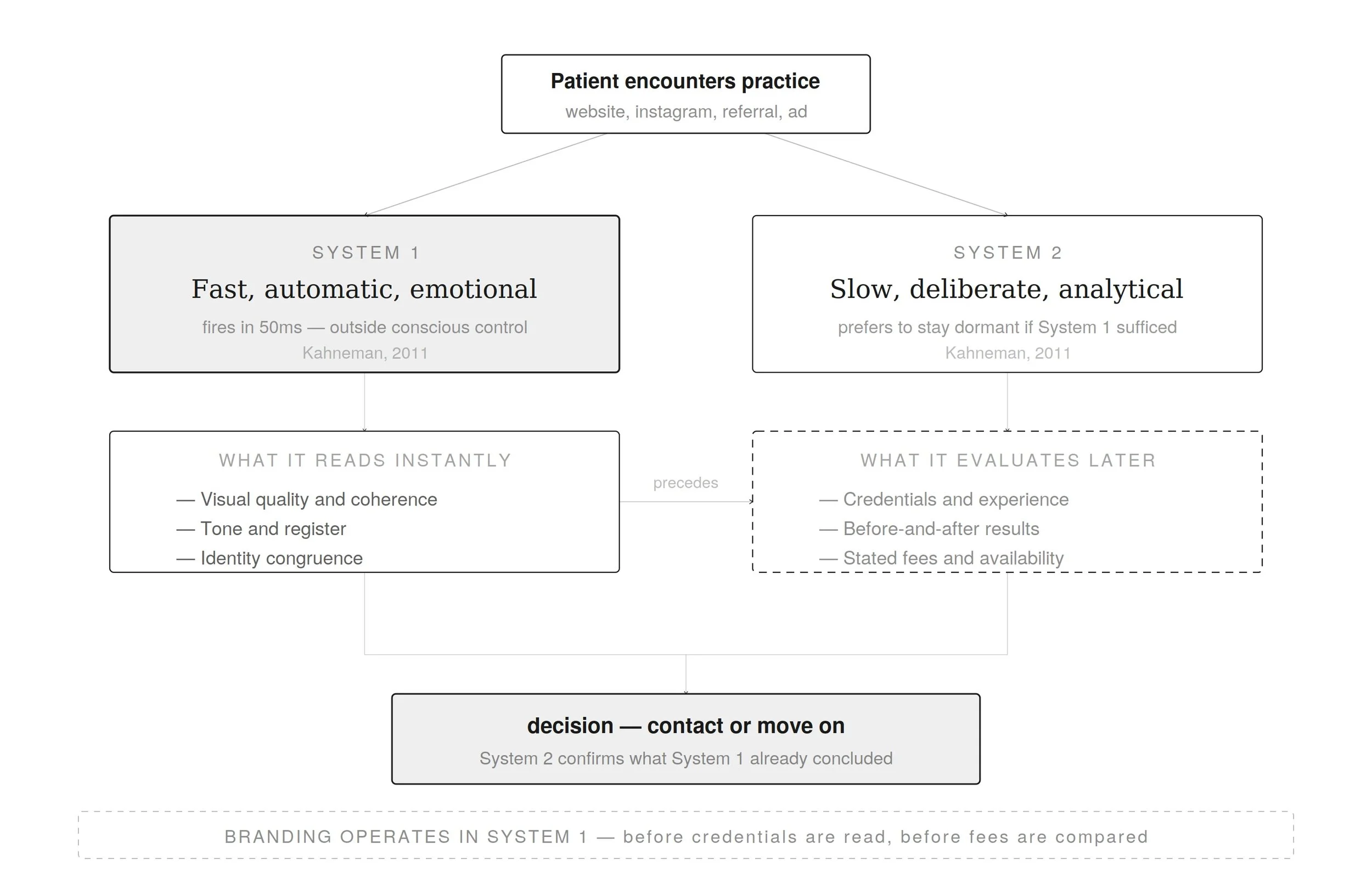
The dual thinking process and branding. Branding shapes the first impression before rational comparison begins. Patients may later evaluate credentials, fees, and results, but the initial sense of trust, quality, and fit is formed almost instantly through visual and emotional cues.
Emotion helps the mind assign weight to information. The neurologist Antonio Damasio documented this through clinical observation of patients with damage to a certain brain region involved in emotional processing. These patients retained reasoning, working memory, and language comprehension, yet struggled to make everyday decisions. Damasio’s hypothesis proposed that emotional responses function as essential inputs to decision-making. Without the ability to assign emotional weight to options, the brain struggles to resolve complex choices, even when the factual information is complete. Although direct evidence from plastic surgery remains limited, the same decision-making mechanisms likely apply when patients compare surgeons and evaluate treatment options. When qualifications appear comparable, patients often rely on how each practice makes them feel. This is a rational way to navigate uncertainty.
Branding Turns Marketing Spend Into Long-Term Equity
A practice spending several thousand dollars a month on paid advertising without a defined brand identity is distributing an unclear impression at scale. With a defined brand foundation, the same spend carries more value because each impression reinforces a specific market position and reason to inquire.
Branding may improve the impact of marketing spend by directing paid attention toward a coherent patient experience. Patients feel more assured about the quality of the practice when all patient-facing materials reinforce the same practice identity. This matters because marketing does not end when someone clicks an ad; the click only begins the evaluation process. A prospective patient still has to decide whether the practice feels worth contacting. Branding helps the patient understand what the practice stands for and what kind of expertise to expect.
Brand strength also influences commercial performance. Strong branding is associated with greater demand, premium pricing, greater resilience during market shifts, and stronger long-term financial performance. In a small exploratory perception study conducted by the author, forty participants evaluated branded and unbranded practice presentations. The results should not be treated as conclusive, but they support a pattern consistent with broader brand-equity research: coherent presentation can influence perceived trust, professionalism, and safety, and increase the intention to book and willingness to pay a price premium.
In the study, the participants that were shown two sets of practices with comparable credentials and results were more likely to indicate willingness to pay higher fees for the branded option. On a five-point scale, branded clinics scored 3.1 against 2.3 for their unbranded equivalents on willingness to pay a price premium, the largest gap recorded across the five constructs measured. Across the other four constructs, trust, professionalism, intent to book, and safety, branded clinics scored consistently higher in every category. The trust gap of 3.5 versus 2.8 and the willingness to pay a price premium gap emerged as the two most pronounced findings.
The qualitative phase of the study provided the reasoning behind these numbers. Many participants associated a coherent visual presentation with medical competence. Several equated good taste in digital presentation with good taste in surgical outcomes. One participant interpreted a modern visual identity as evidence that the surgeon stays current with developments in the field. The absence of a surgeon’s photograph, inconsistent design, and limited access to before-and-after imagery produced the opposite response: uncertainty, reduced safety perception, and lower intent to book.
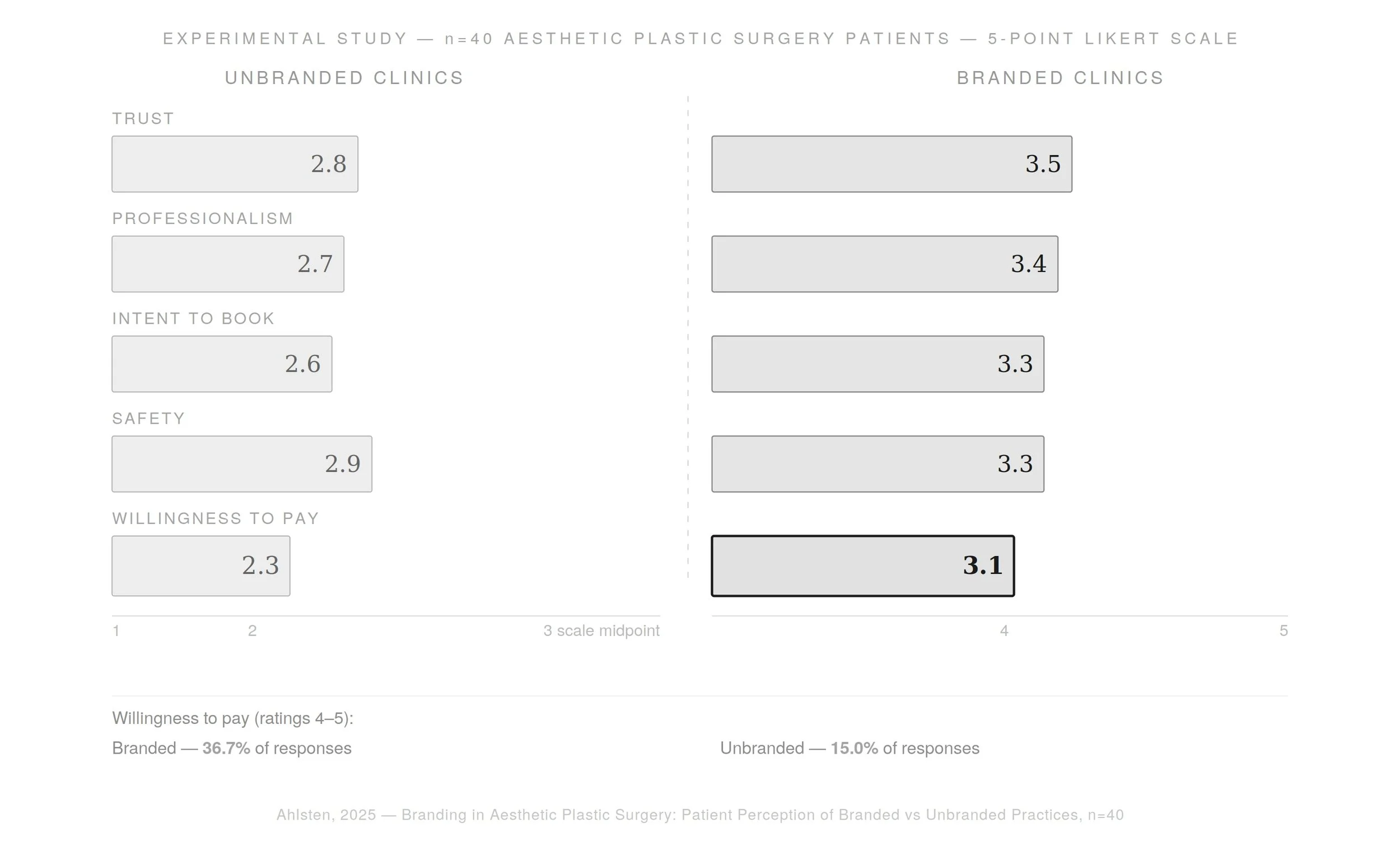
Patient perception of branded versus unbranded practices. In a comparative perception survey of forty participants, branded clinics scored consistently higher than unbranded clinics across all five measured constructs. The largest gaps appeared in trust (3.5 vs. 2.8) and willingness to pay a price premium (3.1 vs. 2.3). On the willingness to pay a price premium construct specifically, 36.7 percent of branded-clinic responses fell at 4 or 5 on the scale, compared to 15 percent for unbranded clinics. The comparison was designed to isolate branding as much as possible across clinic presentations.
Plastic surgery marketing has become increasingly consumer-facing over recent decades, and many of the marketing standards are still forming. The research on how branding shapes consumer judgment is not new, but its application to aesthetic surgery is. Many practices currently look interchangeable online, even when their surgical work, patient experience, and professional standards are meaningfully different. That gap creates an advantage for the practices that choose to include branding as part of their marketing strategy before it becomes an industry standard.
Brand Positioning: Owning a Distinct Place in the Patient’s Mind
Before a practice decides how its website should look, what its social media should say, or how its advertising should be structured, it has to decide what position it should occupy in the market and in the patient’s mind.
Brand positioning distinguishes a practice from its competitors. In plastic surgery, this might mean the surgeon known for revision rhinoplasty, the practice focused on natural-looking mommy makeovers, or the clinic designed for international patients who expect privacy, coordination, and hotel-level service. When a practice is not known for anything specific, patients may fall back on secondary factors: price, proximity, availability, speed of response, or a friend’s recommendation. Those factors can weaken the advantage of a practice trying to build a premium, referral-driven business. A valuable position has three qualities: it must be distinct from what competitors already occupy, supported by the practice’s actual experience, and relevant to the patient that the practice seeks to attract. The illustration below displays the overlap of these qualities.
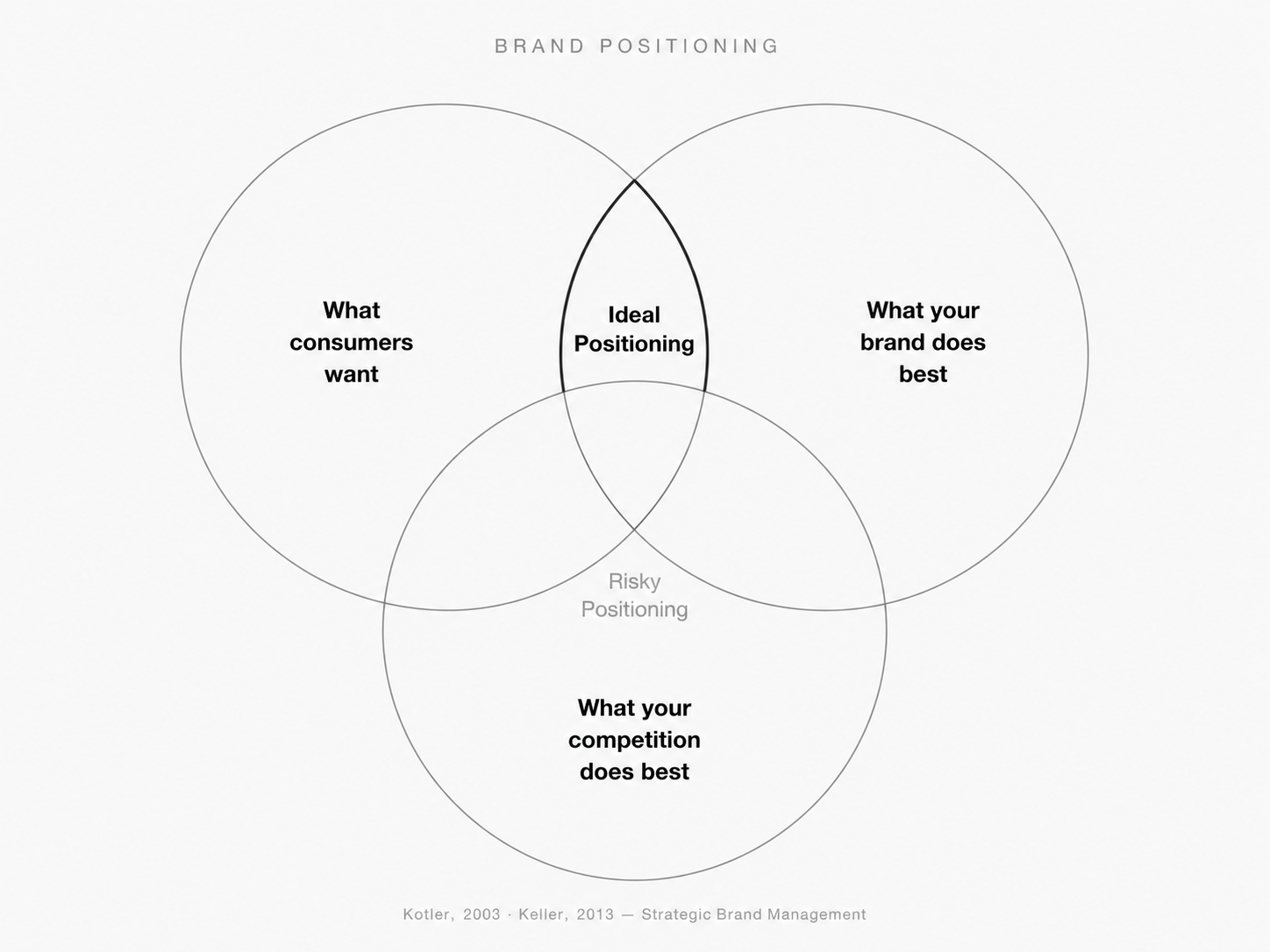
Ideal brand positioning. Brand positioning requires three analyses: what the target patient values, what the practice can genuinely deliver, and what competitors already occupy. Where all three conditions are met, a viable position exists. Everything that follows, including the brand’s visual identity and communication tone, is an expression of it.
Positioning requires choice. When a brand tries to occupy conflicting positions, the result is often ambiguity. The strongest practices rarely try to appeal to every patient. Instead, they define which patients they seek to serve best, and build their brand around that audience. A practice without a clearly defined position may appeal to patients with a broad range of expectations and aesthetic preferences, whereas a clearly positioned practice is more likely to attract patients whose expectations already align with its approach.
People respond more favorably to brands whose image aligns with how they see or would like to see themselves, or how they want to be perceived by others. Related research on self-brand connections shows that consumers can use brands to construct and express self-concept. Careful research of the preferences of the target patient segment helps make choices that communicate preferences that feel congruent with the patient’s values.
Operationally, a defined position gives the practice a shared standard for daily decisions. What is posted on Instagram? How does the consultation room feel? What kind of web design supports the practice’s goals the best? How are patient inquiries handled? Without brand positioning, these decisions depend on individual instinct. With one, they accumulate into a more consistent patient experience.
The Commercial Value of a Distinct Reputation
The advantages of clear brand positioning extend beyond the immediate patient relationship. A defined position can also create commercial value and media access that extends beyond the surgeon’s personal reputation.
Price sensitivity is highest when a patient perceives options as equivalent. When practices occupy the same undifferentiated space, the decision is made on secondary factors: who quoted the lowest, who is closest, who responded first. Therefore, a positioned practice is better protected from competitive pressure. When a new surgeon enters the market with lower fees, newer technology, or a larger social media following, an unpositioned practice is more exposed because patients may compare it on those same terms. A positioned practice has a stronger buffer because patients choose it for a specific meaning, standard, aesthetic perspective, or experience that competitors cannot instantly copy.
The further advantage is media recognition. A surgeon with a defined, articulable position can be pitched in a single sentence to a media representative. A surgeon who is excellent but undefined is harder to describe, regardless of the quality of their outcomes. Press coverage, editorial features, and platform visibility tend to concentrate around practitioners who have given others a clear reason to talk about them.
A practice with a strong brand position is worth more as a business than one without it, even when the clinical quality is comparable. If the surgeon steps back, brings in a partner, or eventually sells, personal reputation can be difficult to transfer cleanly. Brand equity, meaning the accumulated associations, patient expectations, and market position a defined brand holds, can be more transferable than personal reputation alone.
Related research highlights how patient experience shapes trust and loyalty in medical-aesthetic services. The physical environment of the clinic and the way staff present themselves can contribute to patient satisfaction and long-term loyalty. These findings suggest that patients’ perceptions of professionalism and care quality extend beyond medical outcomes and are shaped by the overall experience of the clinic.
About the Author
Jen Ahlsten is a brand strategist and author specializing in luxury branding and marketing for plastic surgeons. She is the founder of Vitruviani and wrote Eminence: The New Standard for Plastic Surgery Marketing.
She publishes educational content on how branding functions as a long-term commercial asset in plastic surgery. Her 2025 study, available on ResearchGate, compares how patients perceive branded and unbranded plastic surgery practices across five dimensions, including trust, intent to book, and willingness to pay a price premium. Ahlsten's background is in marketing and fine art.
Selected publications and resources: LinkedIn · Research · Book · Podcast · Substack· Email
Sources
Ahlsten, J. (2025). Branding in aesthetic plastic surgery: Patient perception of branded vs. unbranded practices. Exploratory perception study. ResearchGate.
Ahlsten, J. (2026). Eminence: The New Standard for Plastic Surgery Marketing. Vitruviani.
Bank, J., Feingold, R. S., Korn, P., Light, D., & Israeli, R. (2023). Branding a plastic surgery group practice: A case study. Plastic and Reconstructive Surgery.
Brandão, A., & Ribeiro, L. (2023). The impact of patient experience on loyalty in the context of medical-aesthetic health services. SAGE Open Medicine.
Damasio, A. R. (1994). Descartes' error: Emotion, reason, and the human brain. Putnam.
Escalas, J. E., & Bettman, J. R. (2003). You are what they eat: The influence of reference groups on consumers' connections to brands. Journal of Consumer Psychology, 13(3).
Kahneman, D. (2011). Thinking, fast and slow. Farrar, Straus and Giroux.
Keller, K. L. (1993). Conceptualizing, measuring, and managing customer-based brand equity. Journal of Marketing, 57(1).
Credibility Forms Across Platforms
Patients researching plastic surgery providers often move across websites, Instagram profiles, review platforms, YouTube channels, and Google Maps listings, forming their impression of the practice from all of them combined.
From Eminence: The New Standard of Plastic Surgery MarketingPatients researching plastic surgery providers often move across websites, Instagram profiles, review platforms, YouTube channels, and Google Maps listings, forming their impression of the practice from all of them combined.
The Cost of an Inconsistent Digital Presence
The decision to contact a surgeon usually develops across several digital encounters. A patient who has spent three weeks investigating and comparing facelift surgeons may have visited a dozen websites, watched hours of surgical explanation videos, read reviews across RealSelf and Google, and saved before-and-after images to a folder on their phone. Across repeated encounters, the patient begins to form an impression of the practitioner. Investing in thoughtful and consistent presentation lets the practice control how it's perceived. A surgeon who recognizes this treats digital presentation as part of professional conduct.
Digital presentation is also a tool to communicate what the surgeon behind the practice deeply values. A gallery presented with care suggests a practitioner who wants patients to see results as they truly are. Educational content that values transparency over persuasion implies that a surgeon believes their patients deserve to understand all the details of what they are considering. References to visual art suggest an approach to aesthetics rooted in proportion and harmony.
Inconsistency across platforms communicates something about the practice's attention to detail, whether or not that was the intention. Picture a surgeon whose website presents them as a meticulous, academically oriented practitioner. The educational articles on the surgeon’s website are extensive and combined with restrained design and professional photography. A patient browsing begins assuming that the surgeon is someone methodical and aesthetically sensitive. Then they visit the surgeon's Instagram, and encounter several carelessly designed promotional posts: a time-limited discount on breast procedures, a giveaway offering a free consultation in exchange for tagging friends. The decision to book may feel riskier than it would have if the website and social media had been aligned to the same standard.
On Platform-Specific Content Formats
In order to create a consistent and professional image, every patient engagement across platforms should feel like a progression of the same practice. A surgeon can absolutely be more clinically precise on their website and more conversational on social media without creating incongruence, but what must remain constant is the underlying set of values the practice keeps communicating. Keeping the platforms visually consistent helps all messaging look recognizable.
Some content formats perform better on certain platforms than others. For instance, the content on the practice website and YouTube is ideally more comprehensive and long-form than the content on social media.
There is evidence that social media marketing in plastic surgery influences patient interest and surgeon selection especially when posts feature before-and-after results, patient experiences, recovery content, and educational information. Relying on engagement metrics alone is an incomplete strategy for determining the effectiveness of plastic surgery marketing. Despite the platform-specific trends that may reward shocking or entertainment-oriented content, there is currently no evidence that producing entertainment-based social media content improves patient acquisition and inquiry quality, even though a few surgeons might have built a large audience with entertainment-based content. Therefore, treating social media as a platform to communicate the practice’s values, results, and approach to aesthetics remains the safest and most efficient strategy for most surgeons.
The Root Cause of Inconsistent Digital Presentation
Coherence across platforms requires applying a single standard across every patient-facing surface, but most practices have not based their marketing on internal brand guidelines that ensure that every member of the marketing production knows what rules to follow when creating marketing materials. Typically, plastic surgery marketing is assembled through separate service providers: a web agency builds the site, a social media manager handles posting, a photographer produces content, and a different provider manages ads or SEO. Each provider functions within its own scope, guided by its own assumptions about what “works.”
When no one is responsible for how the pieces work together, the result becomes fragmented. Without a unifying standard, visual and tonal alignment are left to chance, and inconsistency emerges even when the service providers themselves are competent.
The solution is to establish a detailed brand strategy for the practice, translated into internal guidelines that staff and external vendors can follow. Brand strategy establishes how the practice is positioned in its market, how it intends to be perceived, and how it communicates its values and reaches target patients. Brand guidelines operationalize it by defining visual and verbal communication tone in detail, enabling anyone to represent the brand accurately. The practice’s website, social content, customer service, sales approach, and even review responses start to reinforce one another because they are governed by the same criteria.
Social Proof as Risk Reduction
Social proof reduces the anxiety of committing to surgery by grounding the decision in the experiences of previous patients. A collective positive experience serves as evidence that the decision is unlikely to be a mistake. Sustained consistency across many individual interactions, shown through reviews over time, can establish a kind of reliability that a single testimonial usually cannot.
In a 2025 commercial patient survey of more than 1,000 U.S. adults, 84 percent said they check online reviews before choosing a new healthcare provider. More than half, 51 percent, read at least six reviews before deciding. The same survey suggests online reviews can outweigh personal recommendations for many patients. In another 2024 survey, 72.71 percent of respondents considered online reviews when selecting a healthcare provider.
The way a practice responds to reviews, especially to criticism, carries its own weight as well. A patient reading a critical review that has been sitting unanswered for months is left with two possible interpretations: the practice failed to notice, or it noticed and chose indifference. Research on online physician reviews suggests that physician responses can influence consumer evaluation and choice. A careful, non-defensive reply demonstrates attention, seriousness, and accountability. Silence can suggest the opposite.
Third-Party Verification and Borrowed Credibility
A surgeon’s website can explain their credentials and experience, but patients still understand that the surgeon controls how this information is presented. Third-party mentions matter because they suggest that the surgeon’s reputation exists beyond the practice’s own marketing. A publication feature, institutional affiliation, collaboration with a respected practitioner, quoted comment in a serious outlet, or speaking role at a professional event, give the patient another reason to trust the practice beyond its own claims.
Credible external validation can suggest that the surgeon’s reputation has been recognized outside the practice’s own channels. Patients understand that recognized publications, institutions, and professional events do not feature everyone equally. When a surgeon appears in those contexts, the patient sees the practitioner in relation to people and organizations that already carry authority.
Affiliations work in the same way. Membership in a professional society, privileges at a respected hospital, conference participation, research work, and visible collaboration with established clinicians place the surgeon inside a wider professional structure. A joint educational video, panel discussion, co-authored publication, or other visible relationship suggest that the surgeon belongs to a credible professional community.
About the Author
Jen Ahlsten is a brand strategist and author specializing in luxury branding and marketing for plastic surgeons. She is the founder of Vitruviani and wrote Eminence: The New Standard for Plastic Surgery Marketing.
She publishes educational content on how branding functions as a long-term commercial asset in plastic surgery. Her 2025 study, available on ResearchGate, compares how patients perceive branded and unbranded plastic surgery practices across five dimensions, including trust, intent to book, and willingness to pay a price premium. Ahlsten's background is in marketing and fine art.
Selected publications and resources: LinkedIn · Research · Book · Podcast · Substack· Email
Sources
Ahlsten, J. (2026). Eminence: The New Standard for Plastic Surgery marketing. Vitruviani.
Han, X., Lin, Y., Han, W., Liao, K., & Mei, K. (2024). Effect of negative online reviews and physician responses on health consumers’ choice: Experimental study. Journal of Medical Internet Research, 26.
rater8. (2025). How patients choose their doctors: 2025 report.
RepuGen. (2024). Patient review survey 2024.
Shiah, E., Weidman, A. A., Valentine, L., Alvarez, A. H., Foppiani, J. A., & Lin, S. J. (2023). Capitalizing on social media: An evaluation of the public’s preferences for plastic surgery social media content. Journal of Plastic, Reconstructive & Aesthetic Surgery, 83.
The Patient's First Impression of Your Plastic Surgery Practice
A common first encounter with a plastic surgery practice is a mobile screen viewed briefly while the patient is doing something else.
From Eminence: The New Standard of Plastic Surgery MarketingA common first encounter with a plastic surgery practice is a mobile screen viewed briefly while the patient is doing something else.
Your Website Has 50 Milliseconds to Make a Good First Impression
For many prospective patients, the first impression of a clinic is digital. Surgeons increase their chances of converting visitors into patients by ensuring their online presence is technically and visually as strong as possible, conveying an accurate image of the clinical practice.
First impressions are fast because they are meant to be; people tend to register signs of legitimacy before they evaluate details. Visual cues impact perceived reliability. This applies to website design as much as it applies to a surgeon's personal grooming and the neatness of their consultation room; attention to detail is often interpreted as evidence of credibility and professionalism.
Visual environments shape perception before conscious thought. In 2006, researchers at Carleton University measured how quickly people form stable judgments about websites’ visual appeal. The answer was 50 milliseconds, a fraction of the time of a single blink. This directly contradicts a basic assumption most of us hold about how we think. Rather than evaluating information independently of its context, people often register the context as a feeling first.
Ease as a Credibility Cue
First impressions shape the way later information is interpreted. A patient who lands on a clean and modern website with strong photography will evaluate the surgeon's background with a degree of unconscious trust already in place. By contrast, a patient who lands on a slowly downloading website with blurry images, will read the same content already experiencing mild skepticism.
Studies in cognitive psychology conclude that information that is easy to process tends to be perceived as more credible than information that requires effort to interpret or understand.
In everyday life, we can observe this by paying attention to how the way information is presented affects its appeal. When an idea is explained clearly and simply, the speaker comes across as more competent. If the same idea is explained in a vague or an overly complex way, skepticism about the speaker’s credibility is more likely to arise.
Because of this function, visually ordered and easily legible digital materials can make information appear higher quality. When a surgeon's website is fast, clear, and easy to navigate, that cognitive ease can improve how patients perceive the practice.
By contrast, friction caused by the way information is presented creates cognitive resistance that is then attributed to the quality of the practice. Research on user experience shows that visually complex websites tend to be judged less favorably than simpler designs, even before users have had time to evaluate the content in depth. The illustration below demonstrates this in a visual format.
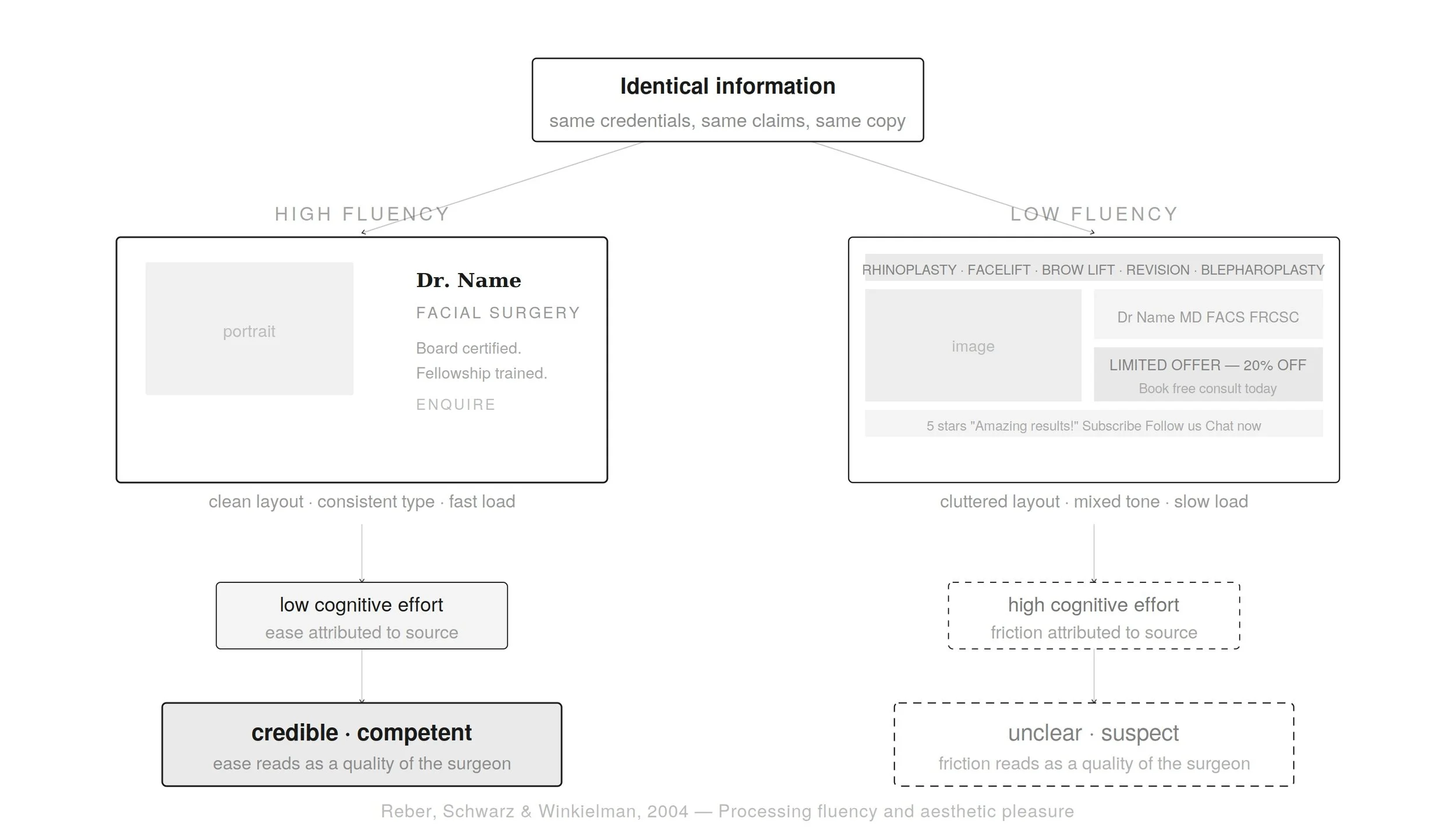
Is beauty in the perceiver's processing experience? When a website loads quickly, its layout is legible, and its visual hierarchy requires no effort to navigate, the brain registers that ease as a quality of the practice rather than a quality of the design. The same credentials and the same clinical claims, presented in a visually complex or effortful environment, may be evaluated as less credible.
The Halo Effect in Medical Judgment
Once formed, the first impression begins to migrate into adjacent assessments without the patient's awareness, altering how new information is processed before it reaches conscious evaluation. In 1920, American psychologist Edward Thorndike showed that evaluators' ratings of one trait tended to spill into ratings of other traits. In his study, commanding officers were asked to rate soldiers on separate qualities such as physique, intelligence, leadership, and character. Soldiers who were rated highly in one domain were often rated highly across unrelated domains, suggesting that an overall impression can distort supposedly separate judgments. The officers attempted to assess each quality independently, but the effect occurred anyway, without conscious awareness. Thorndike concluded that a single overall impression shapes judgments of separate attributes by default.
Research later showed that a favorable overall impression, defined by appearance or presentation, leads to higher judgments of intelligence and competence. The same mechanism can plausibly affect medical judgment, and therefore, each patient-facing element can contribute to the impression of competence. A practice with a modern and up-to-date online presence is often perceived as more competent for the same reason that a clinic with attentive staff is perceived as more competent. Digital details such as a simple digital booking process, third-party profiles kept up to date, and result photography taken in crisp light, shape the patient's sense of the professionalism of the practice.
Patients Judge Books by Their Covers
User Experience (UX) research suggests overall visual quality often shapes whether users continue into the page at all, and that people register overall visual structure and tone before engaging deeply with detailed content. Primary photography signals quality or its absence before the patient reads a word, and a headline that defines the surgeon's position registers in the same instant. The surgeon's introduction, credentials, before-and-after imagery, and procedure descriptions get reviewed only if the first impression manages to hold attention past the first few seconds. Since the first encounter is likely to take place on a mobile device, mobile optimization is therefore a high-priority adjustment.
Consider two surgeons whose rhinoplasty results are clinically comparable, with similar academic credentials and work experience. The main difference between their practices is the quality of their digital marketing.
The first surgeon's website was designed a year ago; a visually restrained design including generous spacing between elements, a neutral color palette, and professionally shot photography. The surgeon’s social media posts repeat the color palette and fonts used on the website. A prospective patient gets an immediate feeling that the practice is modern and serious.
The second surgeon's clinical results are equally good, but their website is difficult to read on mobile, and includes several stock photographs. This surgeon’s social media is not curated to match any other marketing materials, and the tone shifts noticeably from post to post. The prospective patient does not experience the same sense of credibility, and submits an inquiry to the first surgeon.
This can be partly explained by a pattern known as negativity bias. Negative cues and events often carry disproportionate influence, because the human mind does not weigh positive and negative information equally. Some accounts explain negativity bias partly through adaptive threat-detection logic, observable across many areas of judgment and behavior. As a result, positive experiences build credibility and trust gradually, while one negative experience can interrupt that process. The graph below illustrates how inconsistency across patient-facing materials can contribute to hesitation during the decision-making process.
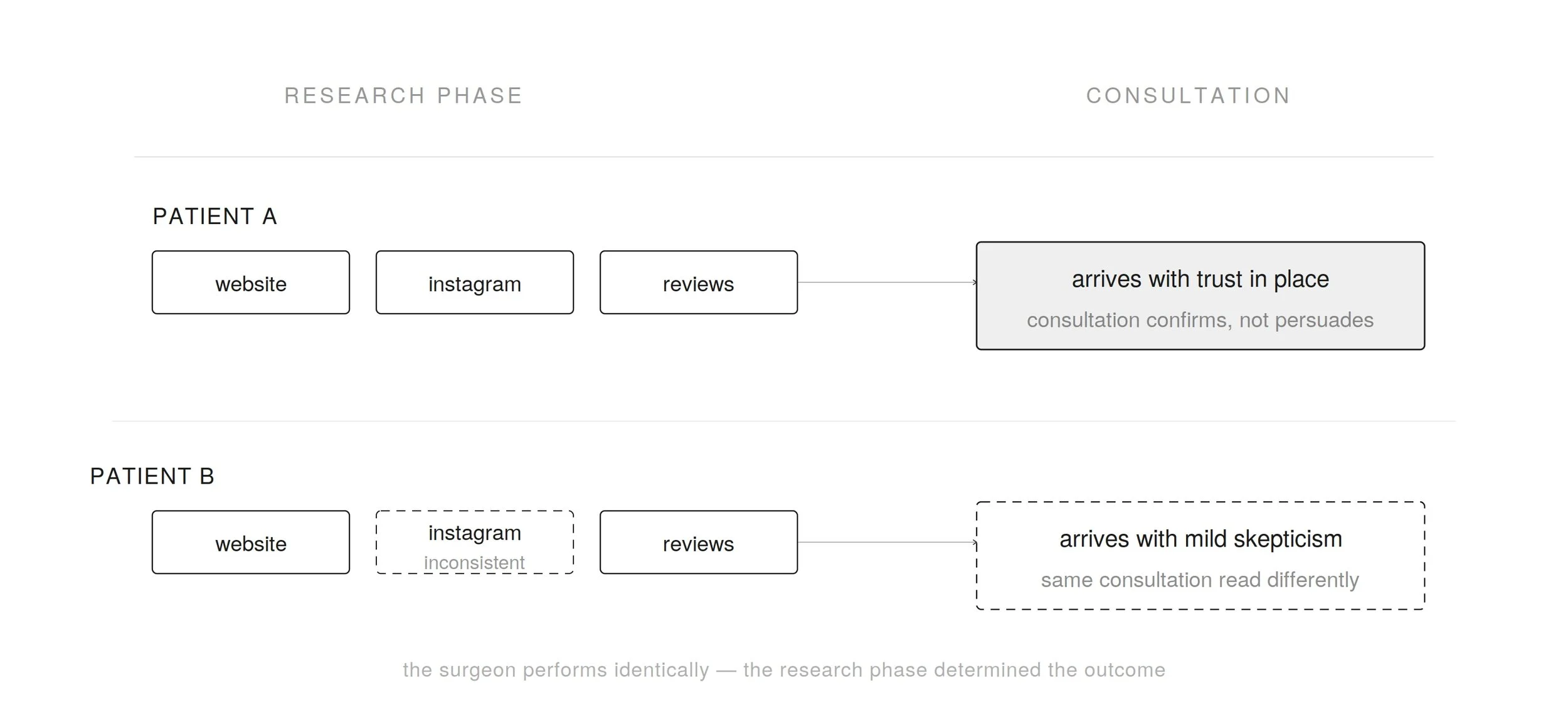
A private consultation is rarely the first trust-building moment between a patient and a provider. A coherent digital experience brings in a patient already leaning toward trust. An inconsistent one forces the surgeon to overcome doubts that the patient might not even be conscious of.
About the Author
Jen Ahlsten is a brand strategist and author specializing in luxury branding and marketing for plastic surgeons. She is the founder of Vitruviani and wrote Eminence: The New Standard for Plastic Surgery Marketing.
She publishes educational content on how branding functions as a long-term commercial asset in plastic surgery. Her 2025 study, available on ResearchGate, compares how patients perceive branded and unbranded plastic surgery practices across five dimensions, including trust, intent to book, and willingness to pay a price premium. Ahlsten's background is in marketing and fine art.
Selected publications and resources: LinkedIn · Research · Book · Podcast · Substack· Email
Sources
Ahlsten, J. (2026). Eminence: The New Standard for Plastic Surgery Marketing. Vitruviani.
Dion, K., Berscheid, E., & Walster, E. (1972). What is beautiful is good. Journal of Personality and Social Psychology.
Nielsen Norman Group. (2021). First impressions matter: How designers can support human automaticity.
Rozin, P., & Royzman, E. B. (2001). Negativity bias, negativity dominance, and contagion. Personality and Social Psychology Review.
Thorndike, E. L. (1920). A constant error in psychological ratings. Journal of Applied Psychology.
How Patients Find and Judge Plastic Surgeons
Most prospective patients arrive at the consultation having already formed an opinion about the surgeon. Before making contact, they evaluate photographs, reviews, social media profiles, and the quality of the practice's online presence, using these cues to judge whether the surgeon appears trustworthy.
From Eminence: The New Standard of Plastic Surgery MarketingMost prospective patients arrive at the consultation having already formed an opinion about the surgeon. Before making contact, they evaluate photographs, reviews, social media profiles, and the quality of the practice's online presence, using these cues to judge whether the surgeon appears trustworthy.
The Pre-Consultation Decision
For many prospective patients, the search for a plastic surgeon begins online. Before contacting a practice, they may compare websites, browse before-and-after galleries, read reviews, and watch educational videos. As they move through this process, they register cues that once carried little weight in clinical contexts: the presence and quality of a practice’s social media presence, the tone of its written communication, and the way critical reviews are handled.
Many surgeons assume that credentials are the most obvious qualifier when patients compare providers. Technically, board certification remains one of the strongest objective indicators of specialized training available to patients, but research suggests that many patients do not fully understand what the credential means, or how it differs from other professional titles.
The evidence suggests that instead of scrutinizing credentials, patients often prioritize other signals when choosing a provider. A 2023 qualitative study of aesthetic surgery patients indicated that patients rely on subjective factors when choosing whom to trust. Study participants consistently emphasized bedside manner, prior patient satisfaction, and institutional reputation as important factors when choosing a provider, while most assigned relatively low importance to board certification. In the same study, none of the participants knew that any licensed physician can legally offer aesthetic surgery. Many assumed that visible professionalism, institutional affiliation, or the title "cosmetic surgeon" reflected a significant level of specialist training.
This implies that being a board-certified plastic surgeon doesn’t always speak for itself; online visibility and presentation influence which practices get noticed and trusted by patients.
Four Assumptions That Cost Practices Patients
Before examining how patients actually make decisions, we first need to examine the assumptions many surgeons have about digital marketing. Many of these beliefs reflect how client acquisition in the plastic surgery industry used to work in the past, and most of them were accurate when the clinic’s online appearance mattered less.
First, most surgeons still assume that clinical excellence will be recognized on its own. While that would be ideal, the challenge is that patients cannot directly evaluate surgical skill before treatment, and rely on other signs of trustworthiness instead. These include result photography, the quality of the practice’s marketing materials, the tone of its communication, and whether the surgeon’s personality and taste feel aligned with their own. As a result, strong surgical work can be overlooked when the surrounding presentation is unintentional or inconsistent.
Another assumption is that digital marketing is separate from clinical reputation and patient experience. As a result, the clinic might appear different on the practice website in comparison to its social media profiles and patient communications. The problem is that patients do not see these materials as separate from the practice; they experience them as cumulative evidence of the practice’s judgment and standards. When the presentation is inconsistent, the practice itself can begin to feel less trustworthy.
A third assumption is that trust begins in the consultation. In reality, trust often starts forming during the research phase, often weeks or months before a patient contacts the practice for the first time. A patient who arrives already confident, compared to a patient who arrives somewhat uncertain, will interpret the same consultation differently even when the surgeon’s performance is identical. A consultation may deepen trust and build rapport, but it usually needs to build on trust that started forming when the patient was comparing providers online.
Finally, many surgeons rely on outsourcing the practice's public image to a marketing team. In reality, marketing tasks can be delegated effectively only when a brand strategy has been put in place. A surgeon certainly does not need to write their own captions, edit videos, or design a website layout, but they do need to be aware of the underlying principles guiding how the practice is presented across patient-facing media.
Social media and advertising teams can execute the planning and creation of the content, but they need a clear standard to follow instead of merely attempting to reach visibility and conversion goals. Brand strategy often sits outside the skill set of in-house marketing teams, which is why many practices benefit from investing in brand strategy that then guides every decision the members of the marketing team make, resulting in more efficient campaigns and content production.
The Referral as a Starting Point
Few credibility signals are stronger than a patient who personally recommends the practice. The reliability of a friend’s personal, unsolicited recommendation is something no advertisement has managed to replicate. Referrals remain important, but their influence has changed; online reviews now function as part of referral verification. In a commercial 2025 survey of 1,008 U.S. adults, 84 percent of patients reported checking online reviews before choosing a new healthcare provider, and 61 percent stated that negative online reviews would override personal recommendations.
The way patients compare providers is changing. Traditional search engines have long been a major entry point for online provider research. AI-assisted search is growing quickly. Recent commercial survey data suggests AI-assisted search is becoming part of how some consumers gather information online. This shift requires plastic surgeons to ensure their practices appear in AI queries. If the surgeon is absent from AI-generated answers, the practice may be less likely to appear among the options the patient initially considers.
When a patient asks an AI which surgeon to consult for a rhinoplasty, they receive a recommendation assembled from indexed practice content, third-party sources, local listings, reviews, and other available web references. Practices with negligible digital content and few credible third-party references may be harder for search and AI systems to characterize clearly.
About the Author
Jen Ahlsten is a brand strategist and author specializing in luxury branding and marketing for plastic surgeons. She is the founder of Vitruviani and wrote Eminence: The New Standard for Plastic Surgery Marketing.
She publishes educational content on how branding functions as a long-term commercial asset in plastic surgery. Her 2025 study, available on ResearchGate, compares how patients perceive branded and unbranded plastic surgery practices across five dimensions, including trust, intent to book, and willingness to pay a price premium. Ahlsten's background is in marketing and fine art.
Selected publications and resources: LinkedIn · Research · Book · Podcast · Substack· Email
Sources
Ahlsten, J. (2026). Eminence: The New Standard for Plastic Surgery Marketing. Vitruviani.
Chen, S., et al. (2023). Patient Perspectives on Selecting an Academic Aesthetic Surgeon: A qualitative analysis. Annals of Plastic Surgery, 91(6), 674–678.
Google. (2024, May 14). Generative AI in Search: Let Google do the searching for you.
Orbit Media Studios. (2026). The AI-Search Adoption Survey.
rater8. (2025). How patients choose their doctors: 2025 report. Commercial patient survey of 1,008 U.S. adults.
Brand Audit
A focused 60-minute review of your practice's current brand presence, marketing channels, and patient acquisition. Identify where your public presentation is costing you patients, and where your brand positioning is indistinguishable from competing practices.