How Design Influences Patients' Perception of a Plastic Surgery Practice
From Eminence: The New Standard of Plastic Surgery MarketingThe visual presentation of a practice influences whether patients perceive it as a good fit. Sometimes, this evaluation is deliberate, such as when a patient recognizes imagery that reflects their age or aesthetic aspirations. More often, the response is immediate and intuitive: the clinic may feel too corporate, too casual, too aspirational, or excessively clinical.
Visual Identity as Market Positioning
Design choices across the digital and physical patient-facing materials of a plastic surgery practice are the visual expression of its brand positioning. When executed correctly, design communicates the practice's value proposition visually, helping prospective patients immediately recognize whether the practice aligns with their needs and expectations.
A practice seeking to attract discreet facelift patients in their fifties and sixties should look different from a clinic specializing in high-volume body contouring. A surgeon known for subtle rhinoplasty should rely on a different kind of visual language than a practice known for dramatic transformations. A strong visual identity helps aligned patients recognize relevance while reducing interest from those unlikely to be a good fit. This is why brand identity cannot be reduced to personal taste but has to be calibrated to the practice's intended market position.
Visual Identity Influences Perception
Patients make assumptions based on visuals even when they are unaware of doing so. Photography, color palette, composition, typography, and logo design each create immediate associations. Visual design in branding serves the same purpose as personal styling: it translates values and intention into a visual language others read before a word is spoken.
Even seemingly minor visual choices affect perception. In 2012, writer and filmmaker Errol Morris ran an informal large-scale online experiment embedded in a New York Times quiz, gathering responses from over 45,000 readers. Participants read the same passage of text set in different typefaces and were asked whether they agreed with the argument. Those who read the passage in Baskerville, which is a formal and classic font, agreed at a higher rate than those who read it in any other typeface tested. The content was identical, so the typeface appeared to have a small effect on how believable the statement felt. Like any visual cue, different fonts trigger different associations. Traditional fonts imply heritage and formality. Minimalist fonts imply modernity.
Similarly, research in associations created by different types of logos found that angular logos are associated with stability and competence, while rounded logos are associated with warmth and approachability. Applied to plastic surgery, a surgeon whose positioning is based on expertise in complex revision cases should look different from one whose brand is positioned around mummy makeovers.
The same principle applies to color. A 2012 study by Labrecque and Milne, published in the Journal of the Academy of Marketing Science, found that color hue directly influences perceived brand personality and consumer response. Neutral and muted palettes are often used to suggest sophistication and exclusivity, while bright, saturated colors can create a more energetic or commercial impression. Again, color should be chosen for the expectation it creates in the specific patient the practice wants to attract.
Few elements communicate the character of a practice as immediately as photography. High-quality photography tends to communicate high quality, making a practice appear more modern and established. The opposite is equally true, which is why one of the most important improvements plastic surgeons can make to their online presence is ensuring that every image on their website and social media profiles meets a high visual standard.
Photographs of the surgeon help build patient trust. In an exploratory perception study, participants consistently cited professional portraits of physicians as contributing to a stronger sense of trust and confidence when evaluating first impressions across different plastic surgery websites. Before-and-after photographs might be the most consequential visual asset a practice produces. The following chapter discusses best practices for shooting before-and-after images to a consistent, high-quality standard.
Avoiding generic stock photography in marketing materials help differentiate from the vast majority of competitors. Research by Hagtvedt and Patrick found that incorporating fine art into a product's visual presentation increases perceptions of prestige, a finding that extends to the broader principle that refined visual surroundings elevate how a product or service is evaluated. Finally, composition and spacing of imagery and other elements in contexts such as web design and social media posts also affect whether the practice feels premium or mass-market.
The Complete Visual System Beyond the Logo
Many practices misunderstand visual identity as a modern website or logo design. These matter, but lose their impact if the brand system as a whole is unintentional. A beautiful website loses authority when the Instagram profile feels unconsidered. An elevated business card cannot compensate for a consultation space that fails to reflect the same standard.
A coherent visual system across patient touchpoints helps reinforce brand recognition and trust throughout the patient's research phase. Patients considering plastic surgery often move through a prolonged decision-making process, and may return to a website several times, forward it to someone whose opinion they value, and repeatedly revisit saved social media posts before booking a consultation. The practice’s visual system should create a recognizable standard across patient-facing materials, whether the patient is viewing Instagram reels or reviewing post-operative instructions on the practice's website.

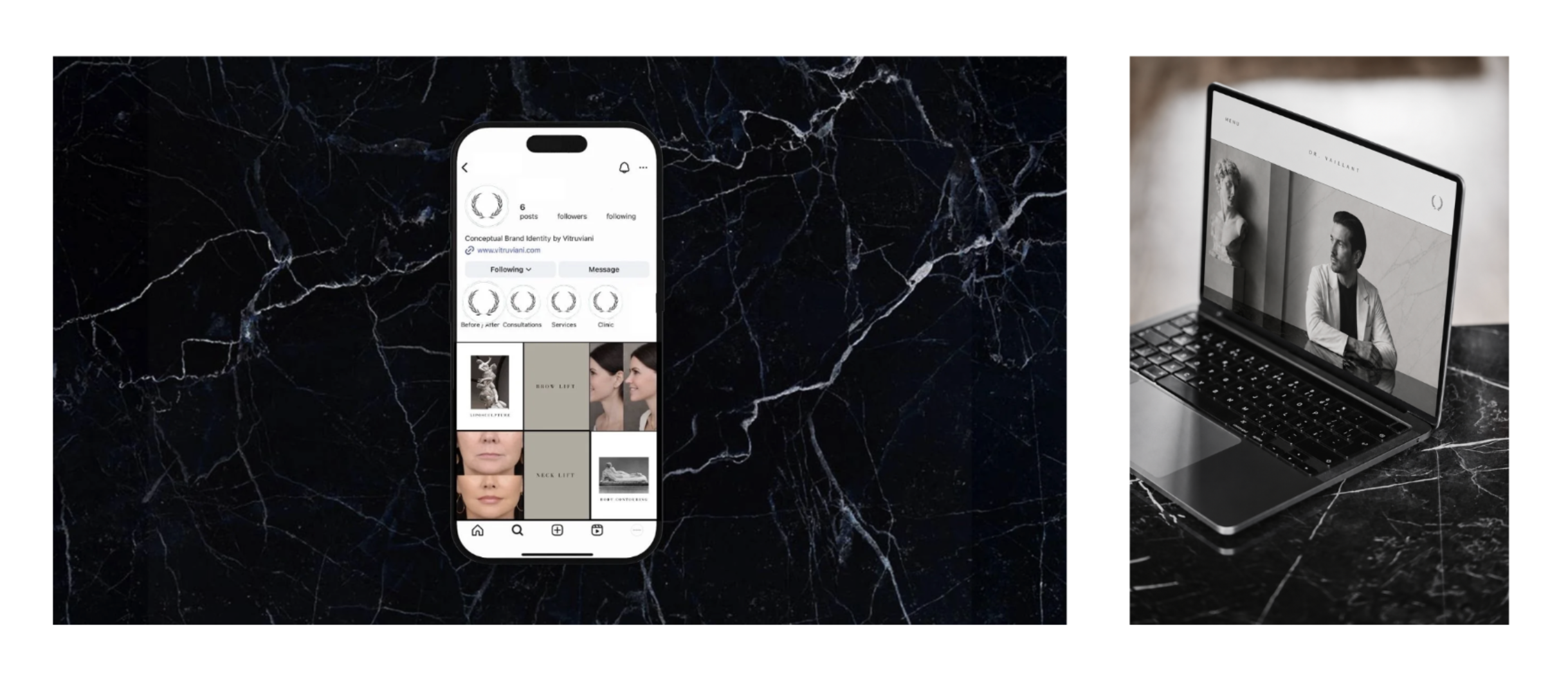
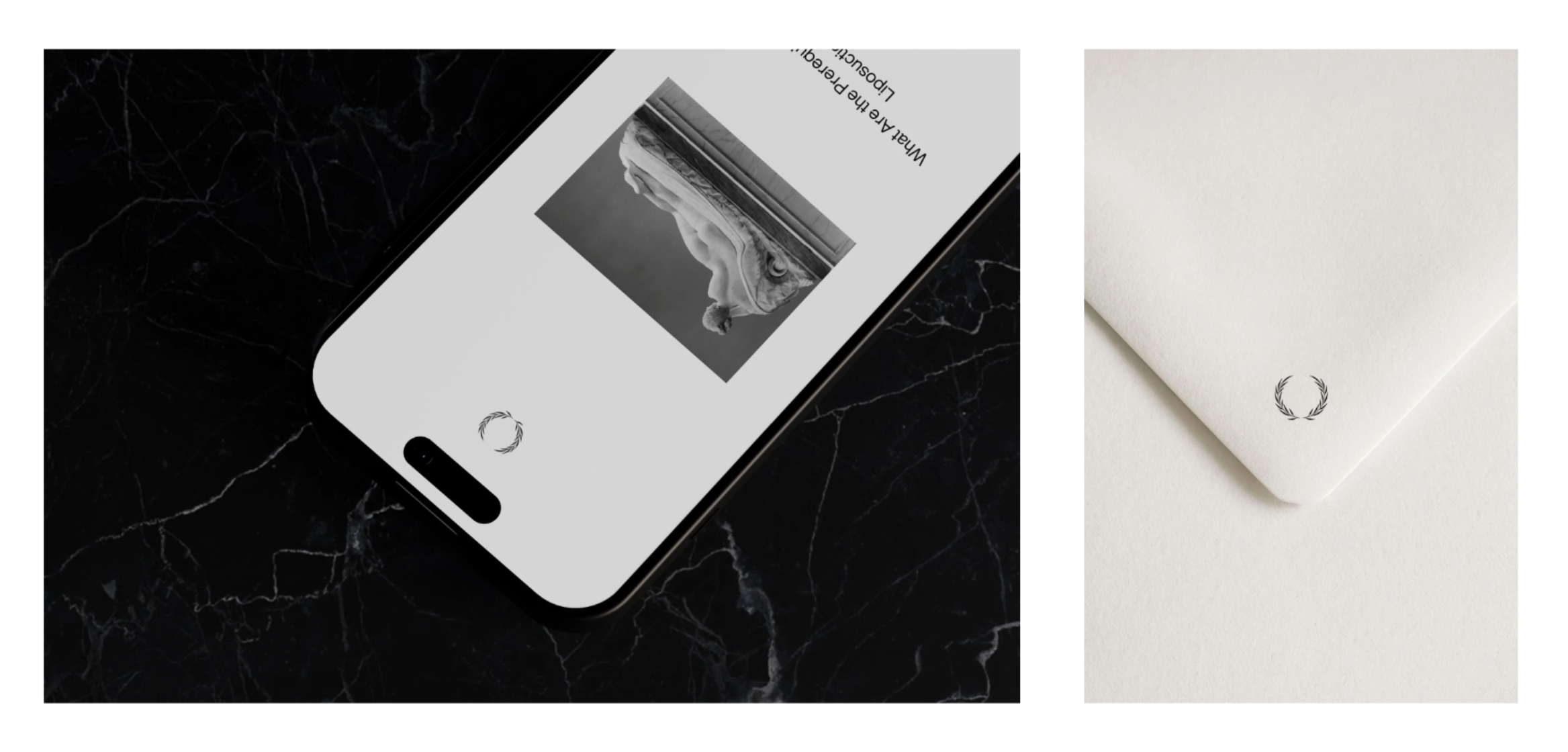
Efficient plastic surgery branding maintains a consistent identity throughout the entire patient experience, from digital presence to physical environment. Dr. Vaillant is a plastic surgery concept by Vitruviani designed to explore what high-level brand consistency can look like in practice.
A practice that communicates advanced visual judgment through its clinic environment and branding can lead patients to infer that similar discernment may shape clinical decisions and outcomes. Similar expectations occur across contexts: a well-dressed consultant is often perceived as more capable, and an architect with a beautifully presented portfolio inspires greater confidence in their spatial judgment.
Design is ultimately part of a larger question about the practice's business objectives. Brand perception contributes to client acquisition and perceived value of services, making brand positioning an important business decision. Vitruviani’s brand consulting helps plastic surgery practices assess whether their current positioning supports their commercial goals.
About the Author
Jen Ahlsten is a brand strategist and author specializing in luxury branding and marketing for plastic surgeons. She is the founder of Vitruviani and wrote Eminence: The New Standard for Plastic Surgery Marketing.
She publishes educational content on how branding functions as a long-term commercial asset in plastic surgery. Her 2025 study, available on ResearchGate, compares how patients perceive branded and unbranded plastic surgery practices across five dimensions, including trust, intent to book, and willingness to pay a price premium. Ahlsten's background is in marketing and fine art.
Selected publications and resources: LinkedIn · Research · Book · Podcast · Substack· Email
Sources
Ahlsten, J. (2025). Branding in Aesthetic Plastic Surgery: Patient Perception of Branded vs. Unbranded Practices. ResearchGate. Exploratory study. ResearchGate. https://www.researchgate.net/publication/403316668_Branding_in_Aesthetic_Plastic_Surgery_Patient_Perception_of_Branded_vs_Unbranded_Practices
Ahlsten, J. (2026). Eminence: The New Standard for Plastic Surgery Marketing. Vitruviani.
Hagtvedt, H., & Patrick, V. M. (2008). Art infusion: The influence of visual art on the perception and evaluation of consumer products. Journal of Marketing Research. https://psycnet.apa.org/record/2008-06730-010
Jiang, Y., Gorn, G. J., Galli, M., & Chattopadhyay, A. (2016). Does your company have the right logo? How and why circular- and angular-logo shapes influence brand attribute judgments. Journal of Consumer Research. https://psycnet.apa.org/record/2016-28899-004
Labrecque, L. I., & Milne, G. R. (2012). Exciting red and competent blue: The importance of color in marketing. Journal of the Academy of Marketing Science. https://psycnet.apa.org/record/2012-20482-006
Morris, E. (2012). Hear, All Ye People; Hearken, O Earth. The New York Times.